THAITAI : A Measure of Understanding
THAITAI : A Measure of Understanding
- Type
- Group Exhibition
- Location
- Bangkok Art and Culture Centre, Bangkok, Thailand
- Year
- 2013
“War is an act of violence to compel our opponent to fulfill our will.”
Prussian military strategist, Karl Von Clausewitz
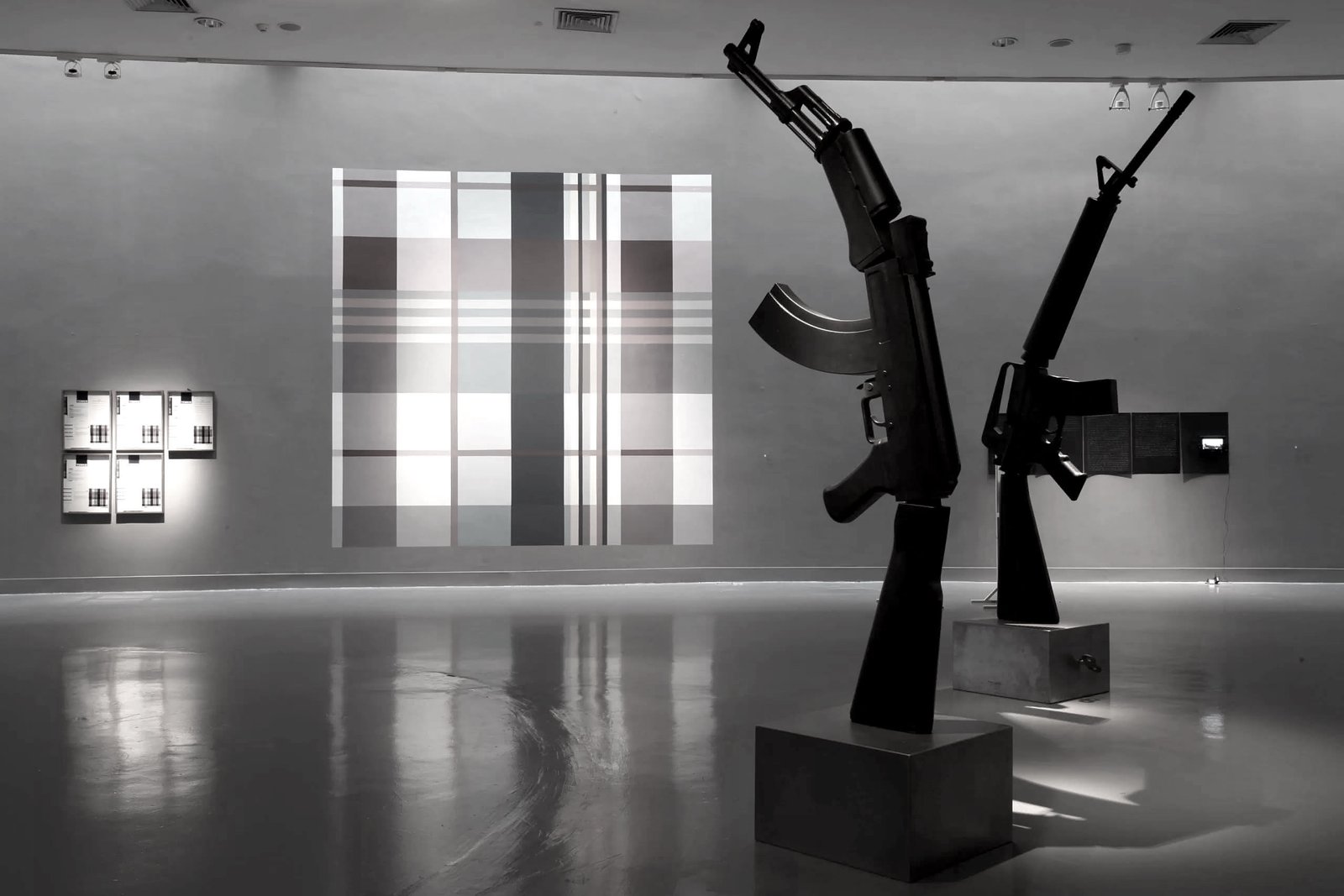
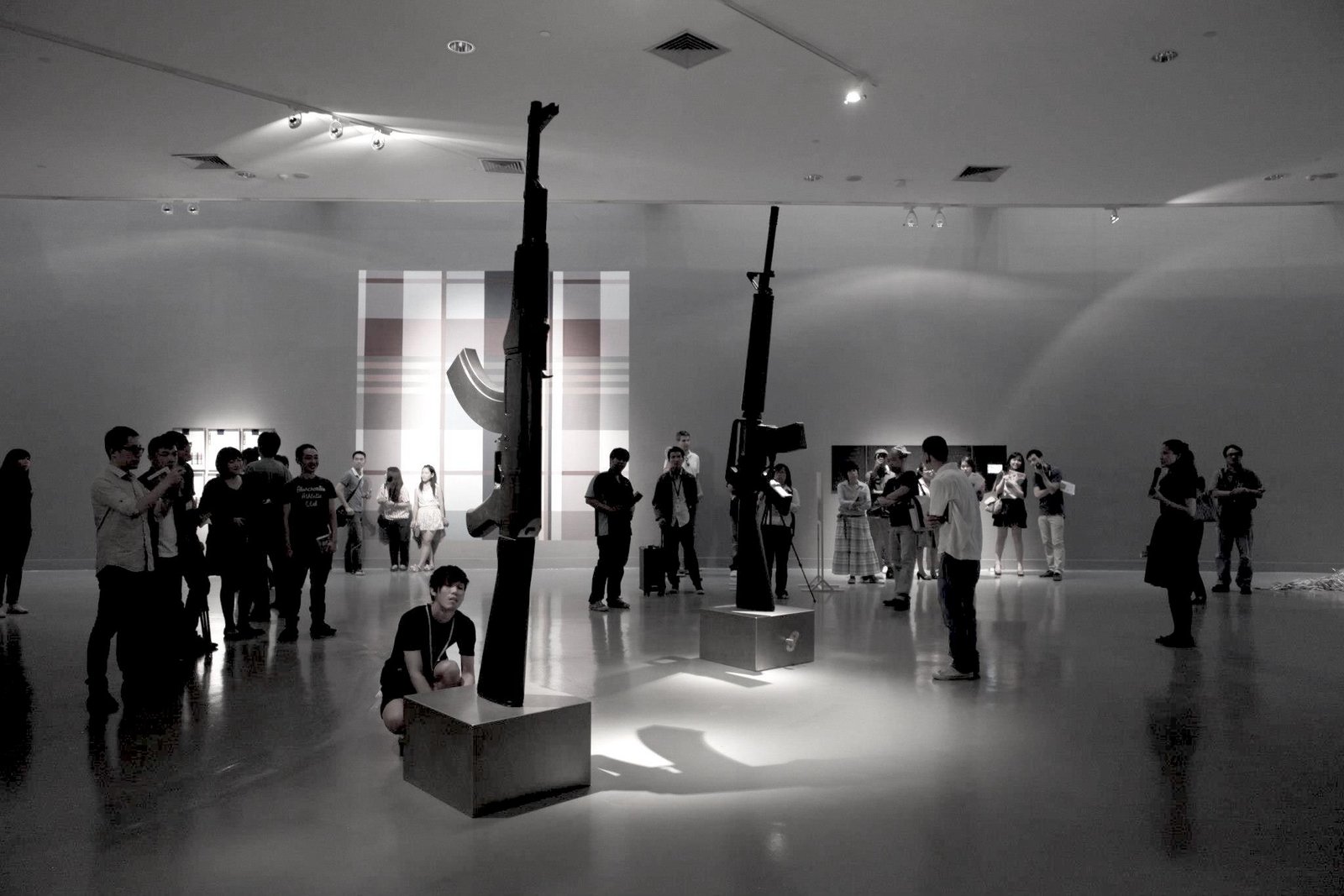
Clausewitz’s definition of war also illustrates the nature of violence, whereupon “the weapon,” being the instrument of war and violence, becomes the natural emblem of authority.
“The Weapon” embodies the force to intimidate and destroy. It obtains its power from our fear of violence and the wounds caused by its destructive blows, nevertheless, a contradiction exists due to the relative positions we are in. Try to imagine being situated in front of the gunpoint and being in the opposite position pulling the trigger, and then recognize the difference between the role in power and the role being threatened.
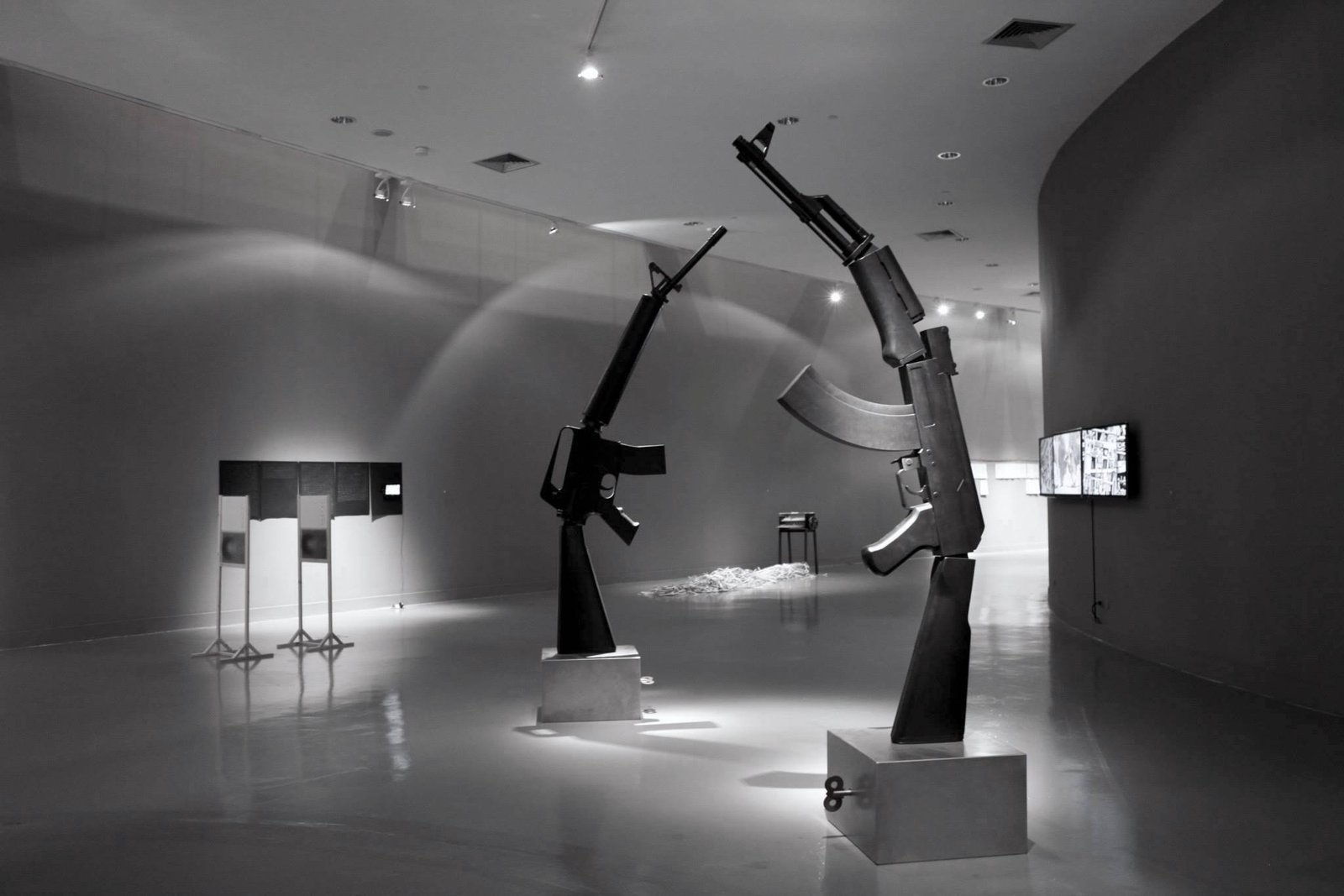
Good, evil, love, hate, life, death, desire, war, peace, national, ethnicity, faith …, when the trigger is pulled and different willpowers are blown up, you will see the ebb and flow of these energies, but their paradoxes will persist. Thus, the “weapons” have no choice but to witness the timeless and unchanging drama of both polarities. It seems to be constantly caught in this extremely contradictory and embarrassing situation. Simultaneously, is there a possibility to show vulnerability or to escape?
Man up! The terms that signify coercion and violence, on the one hand symbolize the “hard” aspects indicating the upper hand for those in charge, while on the other, they represent and characterize these weapons. When the tall, dynamic weapon bends in a soft, absurd, and humorously animated process, the intimidation they once triggered are dissolved and its function and traits are renounced. Winding up its clockworks would be an action repeated in vain, for it seems to have surrendered itself to the unresolved contradictions of human nature and appear in a total state of fatigue.